Biblical Counseling

Providing Hope and Help for Hurting Families

Ministry to families is more than training and resources; it must include the provision of hope and help to hurting families through care and counseling. God designed the family to be the source of our deepest loves, our most beloved relationships, and to provide care for the needs of its members. In a perfect would, we should associate the family with feelings of joy, the thought of home should bring to mind wonderful memories, and it should function as God designed it. Unfortunately, for a growing number of people, the family is a place of brokenness, pain, hurt, divorce, abuse, betrayal, and conflict. This is real family ministry, and we need to be prepared to provide hope in Christ and help from God’s Word.

Three Ways the Church Can Care for and Provide Counseling to Hurting Families:

1. Families ministering to families

Families need to be in community with other families in the church. There are many practical benefits when this happens, but a huge one is care and counseling. This will account for two-thirds of the needs that families have. Bedtime struggles, the basics of biblical discipline, and how to navigate media usage in the home are all topics parents can help one another with.

I’ve found that families ministering to families happens organically as they spend time together and get to know one another. Sunday morning discipleship classes, small groups, serving together, and church gatherings all provide opportunities for families to be in relationship with one another so that care can occur.

Families need a biblical vision for what relationships looks like in a congregation, and one way this is accomplished is by teaching the “one another” passages in the Bible. The phrase “one another” occurs 100 times in the New Testament; of those, fifty-nine times are specific commands teaching how to, or how not to, relate to one another. Obedience to these commands forms the basis for Christian community and care for one another. Here are a few of the “one anothers” that should shape our care for each other:

  • Love one another (John 13:34)
  • Honor one another above yourselves (Rom. 12:10)
  • Build up one another (Rom. 14:19)
  • Care for one another (1 Cor. 12:25)
  • Serve one another (Gal. 5:13)
  • Bear one another’s burdens (Gal. 6:2)
  • Bear with one another (Eph. 4:2)
  • Be kind and compassionate to one another, forgiving each other (Eph. 4:32)
  • Look to the interests of one another (Phil. 2:4)
  • Teach one another (Col. 3:16)
  • Comfort one another (1 Thess. 4:18)
  • Encourage one another (1 Thess. 5:11)
  • Show hospitality to one another (1 Pet. 4:9)
  • Pray for one another (James 5:16)

I don’t know about you, but I would love to be part of a church that strives to live out these relational principles! Care for others is often messy, is rarely convenient, and it requires sacrifice, but it’s such a joy to both give and receive. Let us avoid centralizing all care in a congregation through the pastor and staff, but rather equip the saints for the work of ministry to one another.

2. Community and support groups

Community group and support group leaders are the front line of pastoral care and should be pastored and equipped with great intentionality. Community groups often take the form of a Bible study or an adult Sunday morning class. The individuals who lead these groups have opportunities on a weekly basis to care for the needs of others. The leader should create the kind of group that is attentive to the needs of others, provides the margin so that care can occur, and leads by example in caring for others.

One of the most effective ways to navigate specific, reoccurring needs is to establish a support group around a topic. Our church offers support groups for parents who foster and adopt, for divorce care, and for teen mothers, as well as Grandparents@Prayer (covers a wide variety of topics). The Bible gives the church a special call to care for individuals when their family falls apart or when someone finds themselves without a biological family. The Bible states, “God sets the lonely in families” (Psalm 68:6 niv). We are told to “visit orphans and widows in their affliction” (James 1:27). We have found support groups an effective way to do this as a church.

3. Pastoral counseling

Biblical counseling addresses the problems we experience as we live in a sinful and broken world. Counseling is the problem-solving side of discipleship. Biblical counseling is a Word-based ministry, based on the Bible, just like preaching. Preaching is giving truth to a wide audience. Counseling is giving biblical truth to a specific audience. One of the reasons the counseling load in today’s churches is so heavy is because our preaching is so light. Biblical counseling is the private ministry of the Word of God applied to specific needs of individuals.

The primary goal of counseling is maturity in Christ through repentance, trust, and obedience to God, and reconciliation with others. The focus of biblical counseling is righteousness. Sometimes the sin of a family member creates consequences for themselves and other times it creates consequences for their family members. Healthy families are not the goal of biblical counseling. Healthy families are a by-product of a right relationship with Christ, obedience to God, and surrender to Him.

The Ministry of Counseling

Biblical counseling is an instructional ministry. It is informed by Romans 15:14, where Paul tells the Roman church that they are “filled with all knowledge and able to instruct one another.” Paul tells this local body of believers they are competent to counsel one another because they are Spirit-filled believers equipped with the sufficient Word of God. Paul implies that the Romans had no need to go outside the church for counseling instruction, especially from unbelievers.

Biblical counseling is also shaped by 1 Corinthians 2:4–6, where Paul states that the message he gave to the Corinthian church was not based on the wisdom of this age or of men, but rather the wisdom of God. When we apply this passage to counseling, it means the foundation of our instruction is to be based on the wisdom of God from the Bible, not the wisdom of man found in secular psychology.

The king of all counseling passages is found in 1 Thessalonians 5:14, “And we urge you brothers, admonish the unruly, encourage the fainthearted, help the weak, be patient with all men.” Individuals have different counseling needs. Paul mentions four types of people that are helpful to consider.

Admonish the unruly. Unruly is a military term meaning to stray from one’s post. If you are unruly, you have broken rank and are out of line. What would this look like in Thessalonica? Some in the church thought Christ was coming back soon, so they decided not to help in the community. They broke from the expected pattern of community involvement and disengaged. Paul uses a strong word: admonish. This conveys sitting someone down face-to-face and saying, “Let’s get some things straight.” This is firm instruction. This is not dialogue, but authoritative input that one’s behavior is destructive and harms the community. Many of us shy away from admonishing someone who is wayward. It’s not easy to sit down with someone and say, “I care about you but the way you’re living is out of step with what God expects from you.” If anyone has loved you enough to have this kind of conversation, you know it stings, but it also produces the fruit of righteousness.

Encourage the fainthearted. For whatever reason, this person is discouraged. They are losing hope. They are seeing the negative side of life. They may be ready to give up. Encouragement for this person means that we are sympathetic and caring. The fainthearted don’t need a pep talk. They don’t need to be scolded. They need someone to get close to them, to speak tenderly, and to provide comfort. Encouragement for this person means to infuse heart, strength, and a will to continue. In the Thessalonian church there were some people who needed comfort over friends who had died (1 Thess. 4:13) and what would happen in the future (1 Thess. 5:1–11). This person needed to be refreshed and needed hope in Christ.

Help the weak. This means that we give aid. We provide assistance that helps someone to do something. The literal translation is “hold fast to the weak.” We won’t let them fall. This type of encouragement refers to those who will crumble under life’s pressure. This person has grown weary. Their resources in life do not allow them to make the next step. The idea is that with our help, they are able to move forward in life. This person needs someone to put their arm around them and say, “Together we can do this.” We can take the next step together. What did this look like for the Thessalonians? Paul was fearful that they would crumble under the pressure of temptation (1 Thess. 3:5). So what does Paul do to encourage them? He sends Timothy (1 Thess. 3:2). When life gets rough, we all need a Timothy!

Be patient with everyone. This sums up the three modes of encouragement in one. It reminds us that we are all still growing and that no one is perfect. Thankfully, God is not finished with us yet. Paul’s encouragement is that we bear with others and put up with them for a long journey. We are in a relational marathon. It requires a commitment on our end to admonish people when they step out of line, comfort others when they are faint of heart, and support one another when we are weak. We need to hang in there with people no matter where they’re at on the spectrum. Dealing with the unruly, the fainthearted, and the weak is not a quick fix. One conversation isn’t going to solve the issue. We are reminded to be patient in our counseling.

We have marriages, parents, and grandparents affected in each of these categories. Use them to diagnose what each person needs and the steps you will take to help them. Paul tells us the source of encouragement is our relationship with Christ, “May our Lord Jesus Christ himself and God our Father, who loved us and by his grace gave us eternal encouragement and good hope, encourage your hearts and strengthen you in every good deed and word” (2 Thess. 2:16–17 niv). Ultimately, it is Jesus Christ and the Bible that provide the hope and help to care for hurting families.

Your plan to minister to families should include a care and counseling strategy. Who will provide the counseling? What kind of counseling will they provide? How do families communicate a need for help? How will you train individuals to provide counseling? Which families are currently struggling in your church or school? What are their problems? Answers to these types of questions will help you begin the planning process for a counseling strategy. There are parents and grandparents in your church or school who are struggling to disciple their children or grandchildren because of problems in their home. God has given you the wonderful opportunity to provide hope and help to hurting families through care and counseling.

The article is an excerpt from the book Family Ministry: How Your Church Can Shepherd Parents and Grandparents to Make Disciples by Josh Mulvihill and is available at renewanation.org.

6 Questions to Evaluate if Children’s Ministry Curriculum is Biblically Sound

There are many different children’s ministry curriculums to choose from, but many of them are Bible-lite, doctrinally-deficient, man-centered, and moralistic. We have to look past the marketing claims, sales pitch, and well-designed images to dig deep enough to understand the theology, educational philosophy, and teaching methods that function as the foundation the curriculum is designed upon. There are more than 200 children’s ministry curriculums to choose from and it can be overwhelming to sift through the options. Here are a few questions to help you assess curriculum:

    1. Are the materials used biblically faithful? Does the curriculum accurately teach passages of Scripture in context? Does the curriculum use a verse as a launch pad into a different topic? Does the curriculum make an object lesson the lesson? Does the curriculum use Bible verses as proof texts or passages of scripture as the foundation of the lesson? Are passages correctly interpreted? Who wrote the curriculum and what is their theology? We want to make sure that children learn the original intent and meaning of the Scripture they are studying.
    2. What is the focus of the curriculum? Is the focus on God and His story or man and his story? Is the curriculum God-centered or man-centered? Does the curriculum focus so heavily on rebellion and salvation that children don’t learn systematic theology or gain moral skillfulness from the grand narrative of Scripture? Does the curriculum lift the eyes of children to the greatness and glory of God or present a diminished view of God? How does the curriculum present morality and what is the connection to God (pay attention for legalism, licentiousness, moralism)? Does the curriculum teach children the whole counsel of God’s Word or a reductionistic version? Every children’s ministry curriculum has a focus and we must carefully assess if it is the focus of the Bible.
    3. Will children gain skills that will transfer into their life? Does the curriculum model how to read a passage of scripture, how to interpret it, and how to apply it to life? Does the curriculum teach children how to rightly handle God’s Word, read it, and memorize it? Are there skills that will transfer beyond the curriculum into the life of a child? Does the curriculum primarily teach children Bible stories or does it give them skills in how to correctly approach God’s Word? We want to use the time we have with children intentionally to help them develop sustainable Bible study habits and skills.
    4. Does the curriculum teach children to think biblically? Does the curriculum help children develop a biblical worldview about origins, purpose in life, view of God, the Bible, manhood and womanhood, marriage, the church, the person and work of Jesus, how to live in the world, the problem of sin, and salvation through Christ? Does the curriculum help children to think critically about the views of the world and test ideas according to the Bible? Do you notice cultural buzzwords or concepts that have crept into the curriculum? Children will not be faithful to a faith they do not understand and cannot defend.
    5. How will parents be supported in their God-designed role with their children? Does the curriculum include tools to communicate regularly and effectively with parents? Does the curriculum provide resources to help parents disciple their children at home? \Many curriculums unintentionally become the primary means of discipleship for a child so we want to support and encourage parents in their discipleship role.
    6. What is the educational philosophy of the curriculum? How does the curriculum define education? According to the curriculum, what is the purpose of educating children? Is there clarity about what education is, who is responsible for it, and how God commands us to educate children? What are the teaching methods that the curriculum utilizes and how does the curriculum connect these methods to scripture? Does the curriculum rely on video or live teachers? Does the curriculum use a one-sized fits all educational approach or are the different stages of a child’s development reflected in the curriculum? Many curriculums are marketed as easy-to-use and engaging, but children are not learning God’s Word or being transformed by it.

The next time you evaluate curriculum, use these six questions to help you evaluate a biblically sound curriculum that will shape the hearts and minds of children. Do your research and dig deeply!

Countering Common Objections to Christian Education

Many arguments are made against Christian education by parents and even some pastors. The most common objections will be responded to in this article.

Objection #1: Christian education shelters children from the real world.

The Truman Show was a blockbuster movie that told the story of a man named Truman Burbank. He grew up living what he thought was an ordinary life, but unbeknownst to him, the world he lived in was a large set for a 24/7 reality television show with thousands of hidden cameras, populated with actors, and he was the unsuspecting star. Truman’s hometown Seahaven Island is a set built within an enormous dome, which allows the producer to control every aspect of Truman’s life, including the weather. As the movie progresses, Truman begins discovering unusual elements, starts to question his life, and begins a journey to discover the truth about his world. His journey leads him on a long trip where he runs into the wall of the dome and discovers a nearby staircase leading to an exit door. As Truman considers leaving his world, the producer speaks directly to Truman through a speaker system and tries to persuade him to stay by claiming that there is no more truth in the real world than in his artificial one, where he will have nothing to fear. After a moment of contemplation, Truman bows to the audience and exits.

Millions of children are living a different version of The Truman Show based on an artificial world, except it is called public school. Public education presents a world where God does not exist and is irrelevant to life. In the illusionary world taught to children at public schools, the universe came into existence through evolution, children can choose if they are a boy or girl, and marriage can be between two men or two women. It is a fantasy world where morality is a social construct and promiscuous sex is a good thing. Parents who send a child to public education aren’t preparing children for the real world. They are introducing them to an artificial world built on faulty beliefs and the results are devastating for children. Like Truman, it’s time for parents to exit the artificial world of public education for the real world of Christian education.

In the real world, God reigns as King of Kings and Lord of Lords. In the real world, God created the universe, He defines what it means to be human and what marriage is and is not. In the real world, morality is based on God’s absolute, unchanging law found in the Bible. The real world is a place where God is sovereign, where He controls the laws of science, gave us language and mathematics, created the world to display Himself, and is the author of all history. Good Christian education teaches these life-giving truths and helps children become deeply rooted in the Christian faith while exposing children to worldly ideas to be analyzed through the Bible (Col. 2:6-8; 2 Cor. 10:5).

Education should be built on a strong Christian foundation not an artificial world. If the choices a young person makes are to be good ones, this person must understand the true reality of the world and understand the framework for truth. In biblical language, this is called knowledge. This is why the Bible says that the fear of the Lord begins with knowledge (Prov. 1:7). This of course is not any knowledge, but knowledge of the truth; that God exists and He created the world for a purpose, that we are sinners, and Jesus is the only Savior. These truths are the essential knowledge that a true education teaches and reinforces. If parents want to teach children about the real world, then the only choice is Christian education.

Objection #2: I went to a public school and I love Jesus.

Many Christian parent’s rationalize that they went to a public school and still love Jesus, so why shouldn’t their children do the same? I know smokers who never got cancer and obese individuals who never had heart disease. Certainly, we wouldn’t point to these instances as a reason to start smoking or eating poorly. We can also point to Christian children who went to a public school and love Jesus. Similarly, we would be unwise to use the positive outcomes of the few as justification for school choice. We must remember that the end never justifies the means and experience is not our standard of authority. Please do not make the mistake of using your experience, or that of others, as the standard for your educational decisions. The Bible must be our authority and it tells us the what, why, who, and how of education. In addition, public schools today are fundamentally different than the public school you remember and exponentially more secular in every way. Gone are the days when chewing gum in class and running in the halls where the biggest concerns in public education. Christianity and biblical morality have largely been banned from schools and replaced with a woke agenda, LGBTQ ideology, declining academics, escalating violence, an anti-family agenda, and atheism in curriculum. Voddie Baucham once said, “We cannot continue to send our children to Caesar for their education and be surprised when they come home as Romans.” We would be wise to recognize this reality.

Objection #3: Parents choose Christian education because of fear rather than trusting God.

The primary reason Christian parents should pursue Christian education is to obey the commands of Scripture so that they raise children to know, love, and serve Christ their whole life. The Bible has a lot to say about education using the words knowledge, learn, instruct, teach, wise, mind, and think. The Bible is very prescriptive about what children are to be taught (Deut. 4:9; Ps. 78:4; Ps. 34:11), who is to instruct a child (parents, grandparents, and the church, not the government), the purpose of education (2 Tim. 3:17; Col. 1:28-29; Col. 2:6-8), and how children are to be taught (Deut. 6:7-9; 2 Tim. 3:14-15; Eph. 6:4). The biblical vision for a child’s education is centered on and saturated with God’s Word, God’s laws, God’s work, God’s character, the fear of God, and godly living.

The Bible also provides principles about what Christians are to think about and the kind of people Christians are to be around. Paul tells the church at Philippi, “Whatever is true, whatever is honorable, whatever is just, whatever is pure, whatever is lovely, whatever is commendable, if there is any excellence, if there is anything worthy of praise, think about these things” (Phil. 4:8). Christians are called to meditate on God’s Word day and night (Josh. 1:8). We are told that “bad company corrupts good character (1 Cor. 15:33) and that education is discipleship where the student becomes like the teacher (Luke 6:40). If anything, it is the fear of the Lord that drives parents to choose Christian education, not fear of man. Parents cannot accomplish what God instructs through public education; therefore, it should not even be an option for consideration.

Objection #4: You should send your children to a public school to evangelize others.

The desire to be salt and light and share the gospel with others is a noble thing, but it is a fundamentally flawed argument as a motive for choosing public education. Jesus never said, “Go and be salt and light.” He said, “You are the light of the world.” We are already salt and light to a dark world and we are called to live this out right now, not use this as justification to immerse a child in a world of darkness. Christian schools and homeschools are salt and light to public education and a dark world. Unbelievers ought to see the attractiveness of Christian education and be drawn to it and to Christ. Christian education is an evangelistic engine to lead children to saving faith in Jesus Christ. According to the Bible, the gospel is to be central to teaching children (Ps. 78:5-7). Paul tells Timothy to continue in what he has learned as a young child, “which are able to make you wise for salvation through faith in Jesus Christ” (2 Tim. 3:14-15). What led to saving faith for Timothy? He was taught the Gospel of Jesus Christ through the teaching of the Bible. Any form of education where the gospel is not central and regularly proclaimed is a departure from Scripture.

Public education may be a mission field, but this does not require the missionaries to be children, nor does it limit the church from evangelizing non-Christian children in their community in other ways and at other times. Solders are not sent into battle until being trained, and this is also to be true for Christian children. Evangelism should happen at public schools, but it is through the effort of Christian adults. As a pastor, I was invited to speak every year to all the eighth graders in one of the largest school districts in Minnesota. I was given a full class period for an entire day during the unit on world religions in history class to explain Christianity and I would share the gospel with every eight grader in our community. As a church, we share the gospel with hundreds and hundreds of children through Awana, VBS, ministry in community parks, camps, retreats, and countless other ways throughout the year. The children at public schools can be evangelized in these kinds of ways.

Education is an evangelistic endeavor where children are the objects of mission, not the agents of mission. To confuse these two items is a major error. Would you send your child to a Muslim, Mormon, or Hindu school? Parents are wise enough to recognize that this would be highly problematic for their child. Public education is highly religious in every way with its own secular creeds and doctrine. Children are taught what to believe about the origin of all things, the purpose of life, the meaning of marriage, what it means to be a man or woman, what went wrong in the world, what is the solution, and are provided a secular moral code to live by. Public education has removed God and substituted man in His place. There is no such thing as religious neutrality in public education. Secular humanists, such as Charles Potter, have been very open about this fact for decades. He states, “Education is thus a most powerful ally of humanism, and every American school is a school of humanism. What can a theistic Sunday School meeting for an hour once a week and teaching only a fraction of the children do to stem the tide of the five-day program of humanistic teaching?” Children from Christian homes are being evangelized and then catechized to believe in the religion of secular humanism. Public schools are winning huge numbers of converts from Christian homes. Education is evangelistic and this is why every child from a Christian home needs a Christian education.

Objection #5: Parents can unteach and reteach their children after school to counter secular thinking.

Parents who are careful about their child’s diet, medications, or media are often far more lenient as to the sort of mental ideas offered to children in education. Every idea is like a seed that is placed in the soil of a child’s heart that grows over time and produces deep roots that are not easily removed. Parents try to convince themselves that a strong, rich home with Christian teaching can offset the false teaching of public schools. This perspective ignores the plain teaching of Scripture that what is sown today will be reaped later. Children spend approximately 16,000 hours at school between K-12th grade and the seeds sown from atheistic secularism will likely be absorbed, in part or total, by children. As a pastor, I often had parents urgently ask for help in the late middle school or early high school years. By this point, the seeds had become invasive weeds and the student would proclaim they no longer believed in God, did not want to attend church, hated his or her parents, or embraced LGBTQ ideas.

If I were to name this approach, I would call it educational bulimia. The child consumes secularism seven to eight hours a day and is encouraged to vomit it up after school. I don’t know a single parent who thinks it’s a good idea for a child to literally drink poison and then purge it later, yet somehow this is acceptable for the soul and mind day after day. It is questionable if such a method is even successful and what lasting impact there will be on the child. Can an hour or two of discussion neutralize a week of influence on a child? Will parents fully be aware what the child is learning from curriculum, peers, and multiple teachers? Is it realistic that a parent will read everything and watch everything to know what is being taught in detail? Are schools and young children reliable and trustworthy to accurately and regularly communicate what is being taught? If Christians are spitting out the views and values upon tasting them, then why continue consuming them? If a child was in Christian education, such a radical approach would not be needed. The best choice is to avoid educational poison and provide a healthy educational meal.

Objection #6: Christian education is too expensive.

Christian education is expensive, but we must think according to biblical principles first and order our life accordingly. The reality is that the cost of non-Christian education is far more costly from an eternal perspective. We may need to make financial sacrifices, but it is well worth it to know that this increases the likelihood of our children walking in the truth and spending eternity with Jesus. For some parents, selfishness and misplaced priorities are the real problem, not the cost of Christian education. There are individuals who value a large home, a new car, an exotic vacation, time at the gym, don’t want to do the hard work of homeschooling, or financially sacrifice for Christian education. It is not a money problem, but a heart problem. One couple told me that they feared what their friends and family would say if they chose Christian education for their children. A major problem is that Christians began educating their children like the world. Now, Christians are allowing the world to educate their children and are paying a huge price.

Jen and I have sacrificed significantly to homeschool our five children. However, what we first believed was a sacrifice has become a huge blessing in our life. God has provided more richly than we ever could have imagined. This didn’t happen overnight. There were some lean years financially, but I cannot think of a better investment in a child than Christian education. For Jen and I, choosing Christian education was a step of faith and an act of trust that God has honored. For many individuals reading this article, you know the value of Christian education and understand the commands of the Bible. What is needed is a step of faith and belief that God will provide a way. I encourage you to set your objections aside and choose Christian education.

New Resource: My Story Guidebook for Small Groups or Sunday Classes

In Psalm 78, God instructs older generations to tell younger generations about the work of God and His nature so young people will set their hope in God and keep His commands. The Psalmist states, “Tell to the coming generation the glorious deeds of the Lord, and His might, and the wonders He has done. He established a testimony in Jacob.” God wants us to report to future generations what God has done in our life. God wants us to share our story and talk about our experience with God. God is very specific regarding what we are to talk about: His deeds, His might, and His wonders. Our story isn’t the point, it’s the pointer.

According to the Bible, our story is a means of describing the work of God and His nature. It is our testimony recounting what God has done and who God is. We read, “God has established a testimony in Jacob” (Ps. 78:5). God has also established a testimony in every Christian and He wants us to tell it. We can ask questions such as, “How has God worked in our life? How has He proven faithful? How has He provided for us? What have we learned about God throughout our life? Do our children or grandchildren know about our God stories?”

One method to tell our story is to create a written record to pass on to our children and grandchildren. The Bible utilizes this method to encourage future generations to praise God, “Let this be recorded for a generation to come, so that a people yet to be created may praise the Lord” (Ps. 102:18). God has chosen the written Word as the key method to draw us to Christ and deepen our faith (2 Tim. 3:15; Col. 1:28) and we can do the same by recording our story in writing for our children and grandchildren.

Are You Looking for Help Writing Your Story?

My Story Groups are designed to help Christians write their faith story and capture meaningful memories that will strengthen their children’s and grandchildren’s faith in Christ. My Story Groups were created because many individuals have the best intentions to write their story, but sometimes struggle to accomplish this goal on their own. Recently, my father presented my children (his grandchildren) with his written testimony and the details about not knowing Christ in his childhood or teenage years, coming to faith in college, growing in faith as a young man and newly married couple, and wisdom he wanted to pass on to his grandchildren. My dad’s faith story is a wonderful gift to my children that I pray God uses to draw them to Him and establish a deep faith in their heart. My Story groups help you to write your story and pass it on to your family as a tool to grow their faith in Christ.

The My Story Guidebook is designed around community. Gathering in community with other Christians helps us complete the task of writing our story because we are cheered on by others, inspired by other people’s stories, and supported when we get stuck. The My Story Guidebook can be used in a small group setting, a Sunday School class, or even by Zoom. The guidebook provides details about how to launch and lead a My Story Group. It walks you through how to facilitate, plan, and promote your group. The resource provides sessions and topics of discussion, a group covenant, tips to start and finish writing your story, resources, and some ideas about how to share your faith story with your children or grandchildren. 

The My Story Guidebook is available as a digital download for $7.99 or as a book for $9.99. 

We have seen My Story Groups become transformative for those who wrote their faith stories and those who received them, bearing fruit and impacting individuals in countless and unseen ways. When we share our story, we are honoring the biblical command to tell the next generation about God. Gather with a group of parents, grandparents, or fellow believers and write your story today and bless your family tomorrow. 

Doing Math, Indoctrinating Children, and Lies Children Believe

Doing Math to the Glory of God

A new school year is upon us. I’ve begun to see first day of school pictures on social media so I thought it would be good to think about a school related topic: math. Math was one of the most difficult subjects for me as a child. I received poor grades and needed extra tutoring just to pass. I never loved math. Because I went to a public school for half of my education, I never learned why math works or the motive for learning math. Math makes sense because God created an orderly world. The laws of math are a testimony to God himself. The Bible itself talks a lot about math. In fact, it has a book of the Bible titled Numbers and has a lot of guidance about how we are to be good stewards with money and resources. Math became more bearable for me as I student in college when I was given some reasons to learn it — to serve God through engineering (so we can build a bridge to be a blessing in our city or to reach an unreached people group) and personal finances. The Bible calls us to do all things to the glory of God, including math. In this article, John Piper provides some valuable thoughts that may be worth reading and sharing with your child as you start a new year of math. 

Indoctrinate Your Children or Someone Else Will

Allie Beth Stuckey wisely recognizes that children are always being indoctrinated. Indoctrination isn’t the problem. The bigger question is who is doing the indoctrination and what children are being encouraged to believe and act upon. Allie suggests that children are being encouraged to love self, which is the opposite is what the Gospel calls us to in Scripture. Allie asks parents to consider what worldview we want our children to have and how media and education are shaping their beliefs. The good news is that God has given us the tools we need to accomplish the tasks He has called us to. Through the help of a Bible believing local church and a commitment to making Christ the priority of our lives and hopes, we can saturate our children in the truths of Scripture and entrust them to Lord. To read the article, click here. 

7 Lies Our Children are Encouraged to Believe

We are in a battle for the hearts and minds of our children. In any battle, it is always helpful to know the tactics of the enemy or any details of the strategy to win a war. Elizabeth Urbanowicz shares some of the more common lies from our society that children are in danger of absorbing. It is helpful to recognize these messages so that we can discuss them with our children and help them to reject them as they are encountered. One of the goals we have had with our children is to the be first and loudest voice and to help them understand the truth so that they can reject lies. This video is a little over an hour in length, perfect to watch while folding laundry, preparing a meal, or watching after the kids go to bed (or even with older children). 

Speaking Schedule Over the Next Three Months

I would appreciate your prayers that God would do a divine work in the hearts and minds of those I have the privilege of speaking to over the next three months. I have more than 35 talks and 15 trips, so it’s going to be a very busy stretch. Here is a quick summary of my summer and fall speaking calendar. If I’m coming to your church, city, or state, I would love to connect!

Southeast Homeschool Expo in Georgia

Jen and I fly to Atlanta for a two day event called the Southeast Homeschool Expo where we will speak six times on July 30-31. I’m excited that Jen and I have the opportunity to do this together!

Parenting With a Plan in Virginia

Jen and I are providing a two day parenting conference on August 27-28 based on our new book 50 Things Every Child Needs to Know Before Leaving Home and then I’m preaching at the Sunday services at EastLake Community Church. 

Parenting Getaway for Pastors and Christian Educators in Tennessee

We are hosting 26 couples at Manderely camp in Tennessee. This event is specifically for pastors or Christian educators to help them design a discipleship plan for their children and implement family ministry in their organization. There is no cost to attend, other than paying airfare. We have space for about six additional couples, if interested, let me know. Dates are September 8-10. 

Parenting Event in Minnesota

Woodcrest Church is providing a parenting event on Sept. 15 and 22 to equip their families. I will be speaking on Expanding Your Family Discipleship Vision and Discipling Children: 8 Spiritual Practices Every Parent and Grandparent Can Do. If you are in Minnesota, would love to see you there. No cost to attend. 

Parenting Conference, Grandparenting Events, and Preaching in Virginia

I will be speaking at a Friday night and Saturday morning parenting conference, preaching on Sunday at Parkway House of Prayer, and providing a grandparenting event on Sunday evening September 24-26 in Roanoke, Virginia. 

Mega Con Children’s Ministry Conference in Tennessee

I’m looking forward to being at Mega Con for the first time. Approximately 2,000 children’s pastors and staff will gather for a couple of days of encouragement and equipping. I’ll be at the Renewanation booth and providing a couple of breakouts on Discipling Children. If you are in children’s ministry and attending, make sure to stop by and say hi! October 5-7.

Lake Region Christian School in Minnesota

I get to travel to northern Minnesota on Oct. 15 to speak at grandparents day for the school. I may also have to see if the fish are biting!

Legacy Grandparent Summit in Alabama

I will be gathering with over 1,000 of my closest grandparenting friends in Birmingham, Alabama on Oct. 21-22 for the fourth national grandparenting conference. This event will be simulcast to more than 30 locations. I had the joy of helping launch the Legacy Coalition a number of years ago, so I’m excited to see everyone! I will provide a main stage talk on Shaping the Worldview of Grandchildren.

Mid-America Association of Christian Schools Conference in Missouri

I will be a main stage speaker at the 38th annual educators conference and hosting a table at the event on Nov. 3-5.

Intentional Grandparenting Conference in South Carolina

I’m joining a handful of other speakers including Cavin Harper and Larry McCall to speak to a group of grandparents in South Carolina on Nov. 5-6. 

Parenting Conference in Texas

As the weather gets cooler in Minnesota, it’s nice to escape to some warm destinations. I will head south to Katy, Texas where I will provide a parenting conference at BridgePoint Church on Nov. 12-13. 

If you are in any of these locations, would love to see you. And would love your prayers that God would work in each of these events in the hearts and minds of those I interact with. If you are interested in bringing me to your church, school, or city let me know! I’m currently booked through April 2022 so taking requests for summer and fall of 2022. 

Single Parent Statistics, Education Alternatives, and Discipling a Drop Out

I have a handful of resources that I wanted to let you know about as I found each of them helpful in different ways. 

Single Parent Statistics

The number of single parent homes in the United States continues to grow. Today, more than one out of every three children will be born to a single parent home. The impact this will have on children, families, and society is significant. Ministry leaders must be mindful of supporting and ministering to single parents as they will need additional help. Parents should work extra diligently to help their children understand the consequences of an out of wedlock birth or divorce. One of the biblical methods to detour young people from negative choices is to show them the consequences and allow them to feel the weight of sinful decisions. Grandparents are given a God-designed surrogate role to step into the family when there are needs such as single parenting. If you are interested in seeing single parent statistics, click here. You can search by state to get a clear picture of the need in your area. 

Education Alternatives for Public School

I recently read that California, New York, and Detroit will require children to wear masks when they return to school this fall. I imagine additional cities and states will be added to the list. In Minnesota, where I live, parents are fighting hard right now to ensure masks are not worn this fall, but that is yet to be determined. Parents are also waking up to many of the radical and unbiblical things their children are taught at school. If there was a silver lining to Covid, the shift to online school allowed parents to see what children were being taught. The LGBTQ agenda, comprehensive sex education, critical race theory (also called equity), and an anti-American agenda are a sampling of what public school has become. As a result, public school attendance dropped by 2.36 percent nationally, which equated to over 1.5 million children. The initial indication is that more parents are removing children for this upcoming school year and, I believe for Christians, this is a wise choice. There are three great options for families to consider: homeschooling, Christian school, or live online classes. 

How to Disciple a Church Drop Out

Jared Wilson has written a helpful article called How to Disciple Your Kids Into Church Drop Out Status. This isn’t a feel good article, but for any parent who wants to see their children grow up with lifelong faith in Christ and faithful commitment to a local body of believers, then this is an article worth reading. There is no shortage of research available about drop-out statistics. Depending on the study, you will find that anywhere between 45-80 percent of children drop out of the church. It was once believed that many of these individuals would return later in life. But that is becoming less and less the outcome. Of course, there are many factors that cause a child to drop out of church and walk away from Christ. Jared mentions a handful of them. Most of Jared’s items are focused on the local church. Infrequent attendance, church hopping, and no corporate worship (only children’s and youth ministry) are problematic. I will add to his list divorce of parents, secular education, and parents who prioritize something other than Christ in the home. For parents, these topics are helpful to think about so that we can do everything in our power to eliminate barriers that our children may experience to know, love, and serve Christ.

Two Vacations With a Purpose

If you are looking for an idea for a future family vacation, why not do something that is fun and purposeful at the same time? There are lots of options, but this post is going to highlight two ideas that are impactful and enjoyable. 

Creation Museum Guide

We have been to the Creation Museum and Ark Encounter a couple of times as a family. You will need a couple days, ideally one day for the Ark and one for the Creation Museum. A half a day was perfect for our children, but all families are different. The movies, music, displays, and book store are all fantastic. The apologetic material that we purchased for our children have been read again and again. The staff at the Creation Museum created an educational guide that is worth purchasing and will help you bring some intentionality and talking points to the different displays. They have created different guides for several grade levels, K-2nd, 3rd-6th, and 7th-adult.  There are both student guides and leader guides. Individual copies cost $1.99. We have added one extra element that has really hammered home the truth that our children experience at the Creation Museum. On our drive home we also stop at a natural history museum and discuss the naturalistic, evolutionary beliefs in the displays. On our last trip, my children had a wonderful discussion with the tour guide at the natural history museum about the fallacies behind evolution. We’ve done this trip twice with our children and they recently requested that we do it again. I guess they enjoyed it!

Washington D.C.

We have family that lives in Washington D.C. so visit every few years. There is no shortage of museums and sites to see in Washington D.C. Stephen McDowell, the founder of the Providence Foundation, created a helpful tool that can be used on a self-guided tour of many of the most popular sites in Washington D.C. including the Library of Congress, the Supreme Court, the Capitol Building, the National Archives, the Washington Monument, the White House, the Lincoln Memorial, and the Jefferson Memorial. For a brief overview, click on this link. For $16.99, you can purchase this book. This unique book will guide you through famous historical sites, recounting important providential events, and tell the Christian history of the people who founded this nation and who are honored with monuments, memorials, and statues. Includes: Washington, DC, Philadelphia, Mt. Vernon, Jamestown, Williamsburg, Yorktown, Monticello, and more. Presents biographical sketches of many Founders, highlighting their personal faith: Washington, Jefferson, William Penn, Madison, Patrick Henry, and more. From the paintings in the Capitol to the story of the Liberty Bell, learn how our national buildings, monuments, and heroes declare that America was a nation birthed with a firm reliance on Almighty God. 

Biblical Worldview is Available as an Audiobook

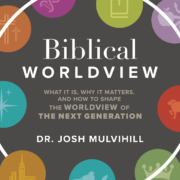
A few months ago I was contacted by Charles Markert, who had just finished reading my book Biblical Worldview. He was impacted by the message of the book and convinced that it needed to become an audiobook so it could be listened to as well as read. Charles believed this so deeply that he offered to record and master the audio. The 6 hours and 29 minute audiobook is now available at Amazon, Audible and iTunes. Thank you Charles for your excellent work on this audiobook!

George Barna’s research suggests that extremely low numbers of children have a biblical worldview. His research suggests that less than 10% of children think, act, and live according to biblical principles. If true, that is a troubling statistic that should concern all parents, grandparents, and pastors. This book was written to help children develop a biblical worldview through the influence of family, church, and school. Here is a summary of the book.

In this brief book, you’ll discover what a biblical worldview is, why it matters, and how to establish this foundation in the life of a child. Filled with practical tools and ideas, Biblical Worldview will help you lead children to lifelong faith in Jesus and a fruitful ministry serving him in the world. It’s a helpful resource for parents, grandparents, teachers, and church leaders – anyone that leads children in their spiritual development. 

There is a battle being fought for the hearts and minds of children, and much is at stake. The world is working diligently to assimilate young people to its way of thinking. The beliefs our children develop inevitably shape their decisions and determine their eternal destiny. In a word, worldview is about beliefs. This book will equip you to help young people develop a strong biblical foundation and doctrinal framework for a biblical worldview. Biblical worldview is built on the foundation of the authority, inerrancy, and sufficiency of the bible. This book will help you establish this foundation in the hearts and minds of young people so that they trust the bible, think about life from a Christian perspective, and live according to biblical principles. 

Our worldview is developed as we establish beliefs about four critical topics: 

  1. Creation: How did I get here? What is my purpose? 
  2. Rebellion: What went wrong? Why is there evil and suffering? 
  3. Salvation: What is the solution? Where do I find hope? 
  4. Restoration: What happens in the future? How do we transform lives and change the world? 

These four pillars create the framework for a person’s worldview. It is critical that all four pillars of faith are firmly established and that deep-down convictions are developed around these biblical truths. Biblical Worldview is a serious call to shape the next generation’s beliefs with the bible. The aim of Biblical Worldview is embracing gospel truth for godly living. This book is a short introduction to biblical worldview and will equip you to help children develop a biblically-based view of life that will transform their homes, communities, and nations.

Philosophy of Homeschooling, Emptiness of the Modern Home, and Countries With Slavery

I ran across a handful of resources that I wanted to let you know about as I found each of them helpful in different ways. 

5 Flavors of Home Educating

Home educating has grown considerably over the past year and many couples are thinking about homeschooling in the future. If you are currently home educating or considering it, then this 25 minute video may be valuable to watch. My wife and I are veteran homeschool parents of five. One of the questions we get regularly is regarding what approach to take and the differences in homeschool philosophy. This is one of the most concise, clear explanations I’ve found. If you are thinking about taking the dive into homeschool this fall, then this would be a great video to watch. Jen and I are predominately a hybrid of Charlotte Mason (we use a literature based approach) with a classical leaning. We have many friends who utilize a different philosophy than us and are thriving as well. Listen to this video and identify which approach may fit your family. 

Making the Home a Place of Purpose and Production

I found the article A Place to Eat, Sleep, and Watch: Emptiness in the Modern Household by Desiring God very encouraging and insightful. The author notes how changes in the industrial era impacted the home by causing a majority of valuable endeavors to be outsourced, which has greatly reduced the impact and value of home. Education, care of elderly, recreation, grandparents, discipleship, and business have all been outsourced emptying the home of people (extended family, school aged children, singe, and sick), productivity (home industry, education of children, involvement in community), and with all this, the purpose of the home as decreased. As a result, the home has become a place to eat, sleep, and watch shows. Being intentional to make the home a hub for people and a place of production will help to restore a sense of purpose.  

Countries that Still Have Slavery

I found this website sobering and helpful in creating perspective regarding the current cultural conversations happening in America. Today, over 167 countries enslave people, which impacts over 46 million individuals. The top countries include India (18.4 million), China (3.4 million), Pakistan (2.1 million), Bangladesh (1.5 million) Uzbekistan (1.2 million). These are real people in modern slavery. The current discourse in America about racial issues pale in comparison to the reality of what is happening in these other countries. While America is not perfect, we have made great progress that has not occurred in other parts of the world and the reason for this success in America is Christianity. If you would like to learn more about what countries have modern slavery and the numbers, click on the link above.